Retaining Wall Cost Considerations

Written by admin on June 11th, 2010

“How much does a retaining wall cost?”  It’s a question I get asked often, but there’s no cut and dried answer.  Due to the fact that there are so many variables in retaining wall construction, it is impossible to quote a “one size fits all” price.  Every situation is unique and every retaining wall is different.

Let’s take a look at the various factors that determine what a retaining wall will cost.

Materials

Some of the most popular materials used to build retaining walls are timber, modular block and natural stone.  Each varies greatly in price, depending on the size, the style, and the source or the manufacturer.  One thing to keep in mind is that – while one material may be cheaper than the others – it may actually cost more in labor to install.

Most retaining walls require the use of drain pipes and backfill materials, such as crushed rock or gravel.  In certain situations, soil may need to be brought in.

Grid or tiebacks should be utilized in retaining walls taller than 3 feet to add stability and strength.  Cement, glue, clips, pins or nails may be also needed for added reinforcement.

Machinery and Labor Costs

Excavation – Most retaining walls will require some sort of excavation, either by hand or by machine.  A trench needs to be dug in order to bury the first course of the wall below ground level.  For tall retaining walls, additional courses may need to be buried to help keep the wall stable and secure.  Those walls will require more extensive excavation.

Compaction – Every so often, the backfill of the retaining wall needs to be compacted.  This stabilizes the wall and helps prevent it from shifting.  Compaction is best done with a machine called a compactor. 

Labor – As a general rule, natural stone retaining walls cost more to build than timber and modular block walls.  This is due to the time and effort it takes to fit random pieces of stone together and properly set back the wall.  Modular block takes less time as the block is manufactured to fit together and the set back is often built in.

Other Cost Considerations

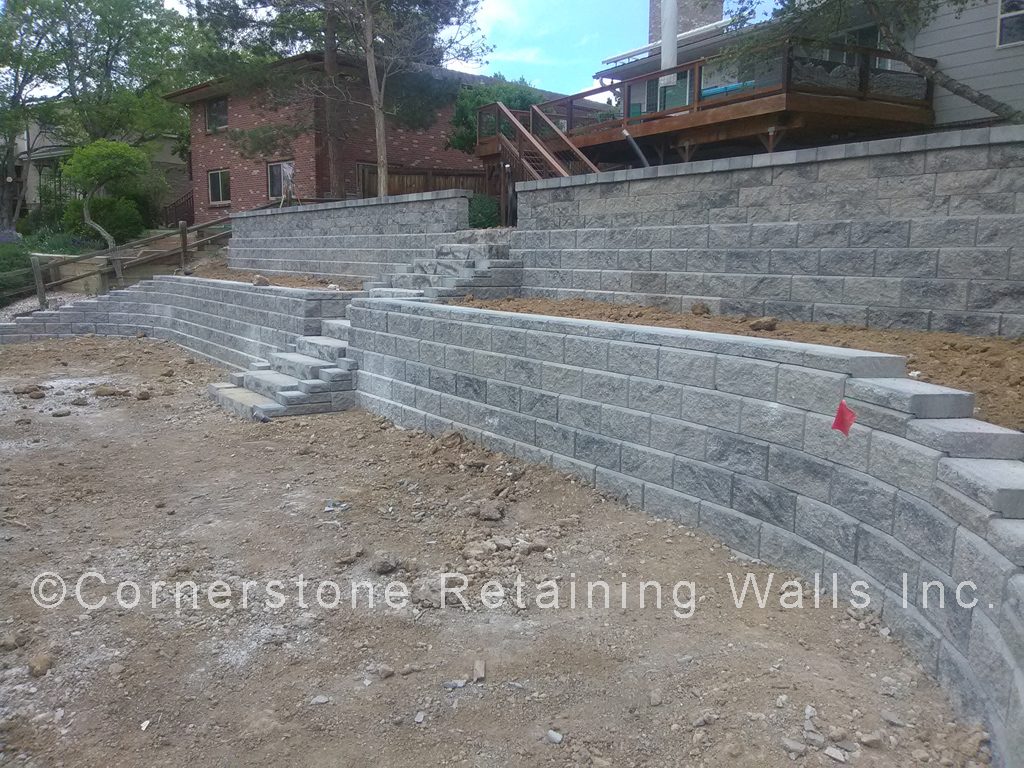
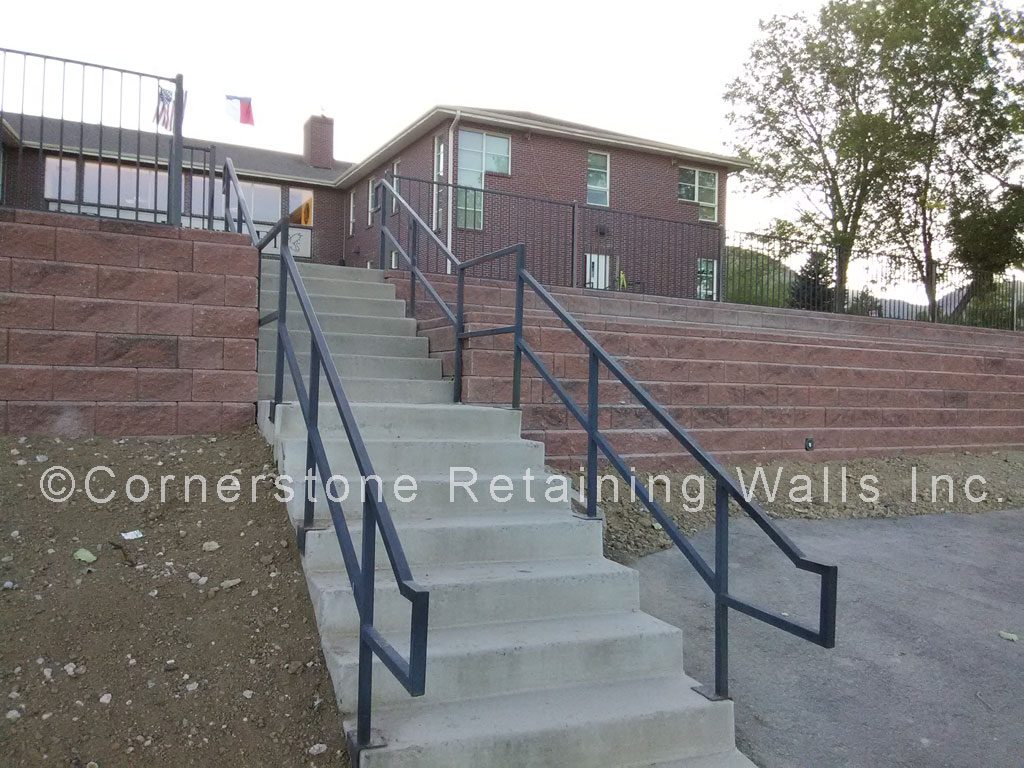
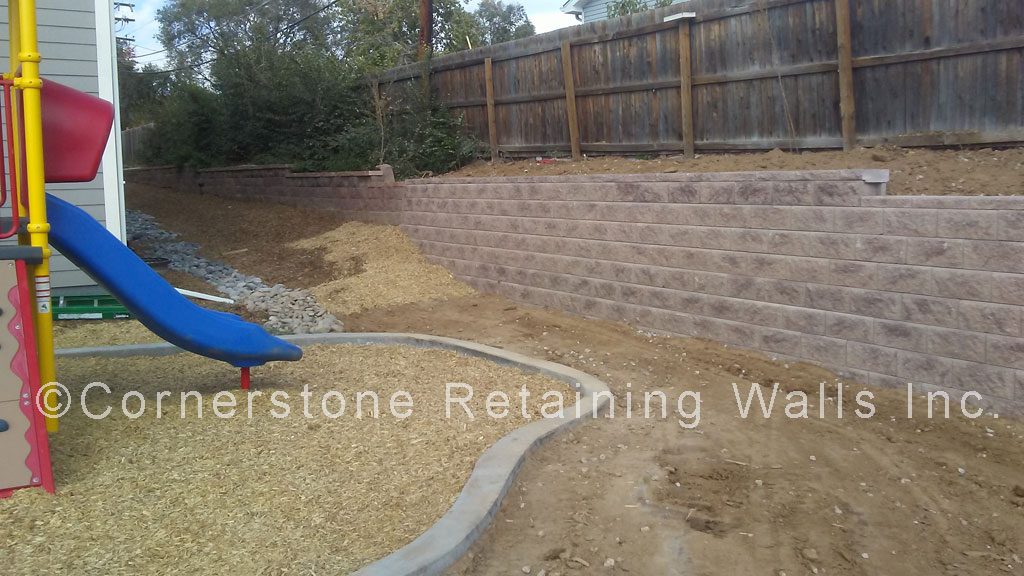
Tiered retaining walls or walls that integrate pillars, steps or curves will incur higher labor costs because they are more time intensive to build.

Building permits may be required by your city or county.  Certain circumstances, such as a wall exceeding a certain height or a retaining wall designed to support a driveway, may require engineering.

Access also needs to be taken into consideration.  A building site where materials can easily be delivered and moved around by machinery will cost less than a site where materials need to be transported in with a wheelbarrow.

Retaining Wall Cost Quote

The cost of a retaining wall is quoted by the square foot.  When all the above factors are taken into consideration, the average range is anywhere from $13.00 – $35.00 a square foot.

As you can see, a multitude of factors determine the cost of a retaining wall.  When you receive a quote, make sure that the builder has taken all the above variables into consideration.  Doing so will help ensure that there are no surprises when the bill arrives.

Cornerstone Retaining Walls, Inc. is located in Evergreen, CO.  View pictures and get more information at www.Colorado-Retaining-Walls.com or call Clint at 303-564-4175.

Tips on Hiring a Retaining Wall or Landscape Contractor

Written by admin on April 1st, 2010

Many homeowners prefer to hire an expert for their home improvement projects rather than do it themselves.  And understandably so. They don’t want to waste time and money on something that might not turn out the way they envision.  They want the project done quickly and they want it done right.

At the same time, many people are leery about hiring a contractor.  Often it’s because they’ve had a bad experience with one or have heard horror stories from someone who has.

While there’s no guarantee that you won’t have problems with your contractor, there are some guidelines you can follow that will increase your chances of hiring one who is both honest and trustworthy.

Get it in writing. Make sure that the details of the project are outlined in a contract that is signed by both you and the contractor.  If the scope of work changes while the project is in progress, be sure to get a change order.  The change order should detail the work added or eliminated and specify adjustments to the cost.  Don’t forget to obtain original signed copies of all contracts and change orders.

Insurance matters. Ask to see a copy of their general liability certificate, then call the insurance company and verify coverage.  Contractors without insurance will often do the work for a lower price, but it comes with a risk.  You could end up being financially responsible for any damage the contractor does.

Cheapest isn’t always best. Don’t go with a contractor just because their bid came in the lowest.  Many times a contractor whose bid is significantly lower than the competition will end up taking shortcuts and produce poor quality work in order to increase their profit margin.  Surveys have shown that people who have hired the lowest bidder are most often disappointed with the end result.

Get references. Get at least 3 references and follow up on them.   Check with the Better Business Bureau to see if there have been any complaints filed against the company.  If possible, ask to view prior work that they’ve done.

Wait to make the down payment. Many contractors will ask for a down payment in order to pay for your job materials up front.  But homeowners don’t want to fork over money only to risk never seeing the contractor again.  Ask if the down payment can be made once the materials have been delivered and the work begins.  An honest contractor will agree to these terms.

Get a warranty. Get a written warranty that specifies exactly what is covered and what is not.  If you have questions, be sure to get them clarified in writing.

Use caution, do your research, and ask questions.   You’ll then be confidently on your way to hiring a contractor you can trust along with a completed project that will bring you long lasting enjoyment.

Cornerstone Retaining Walls, Inc. is a dependable retaining wall builder and is accredited with the Better Business Bureau.  To view pictures of projects or to get more information, log on to www. Colorado-Retaining-Walls.com or call Clint at 303-564-4175.

©2010 Cornerstone Retaining Walls, Inc., All Rights Reserved.  If you’d like to reprint this article, please contact us to request permission.

5 Advantages of Using Modular Block for Your Retaining Wall

Written by admin on January 8th, 2010

Most people think of retaining walls as a functional way to retain soil. In truth, retaining walls have a myriad of uses. From a visual standpoint, retaining walls add beauty and visual interest. From a practical standpoint, retaining walls help control erosion and create more usable space.

However, not all retaining walls are created equal. Modular block retaining walls, also known as segmental retaining walls, have several added advantages over other material, such as natural stone or timber. Let’s take a look at them.

1. Options, Options, Options

Once upon a time using modular block for your retaining wall meant you had one choice – a uniform gray block that looked like concrete. Luckily, those days are gone forever. Retaining wall block now comes in a wide variety of shapes, colors, sizes, textures and patterns.

Modular block can now replicate the beauty of natural stone or duplicate the look of brick or cobblestone. The creative block designs and patterns can help you achieve almost any look you desire. Rustic, old world, classic and antique are a few popular styles.

2. Ease of Installation

One of the most highlighted advantages of using modular block is the ease of installation. Since the blocks are specifically manufactured to fit together, building the wall is often as easy as stacking one block on top of the other.

In comparison, natural stone or rock retaining walls require the time consuming effort of trying to fit random pieces together. This makes them highly labor-intensive and costly to install.

Another advantage of retaining wall block is that many designs automatically setback when stacked. (A setback adds a slight inward slant to the wall which helps to reinforce it. It is also known as the batter of the retaining wall.) This built-in system eliminates the time and guesswork needed to properly setback rock or natural stone retaining walls.

3. Easily Integrated

Block can be chosen to compliment your other hardscape material such as pavers and brick. In addition, retaining wall block can be used to create other beautiful landscape features such as planters, steps, pillars and patio enclosures.

4. Environmentally Friendly

Simply stated, retaining wall block is not chemically-treated and will not harm the environment. Timber, in turn, has lost its popularity due to the chemicals it releases into the ground which can be harmful to the surrounding vegetation.

5. Long Lasting

It’s been said that the Great Wall of China was built utilizing some of the same methods that are used to build segmental retaining walls today. Therefore, a well-built segmental retaining wall has the potential to last hundreds of years. Compare this to the average life span of 15 to 20 years for timber retaining walls and it is easy to see why block is the better choice.

Regardless of what material you choose, the use of a solid foundation, appropriate backfill, proper drainage and good compaction will all contribute towards a retaining wall that will be around for you to enjoy for many, many years.

Cornerstone Retaining Walls, Inc. is located in Evergreen, CO. Paver installation is now offered in addition to retaining wall construction. View pictures and get more information at www.Colorado-Retaining-Walls.com or call Clint at 303-564-4175.

©2010 Cornerstone Retaining Walls, Inc., All Rights Reserved.  If you’d like to reprint this article, please contact us to request permission.

Retaining Walls…an Easy, Affordable Way to Spruce Up any Landscape Design

Written by admin on June 22nd, 2009

Retaining walls are beautiful structures that can seamlessly be worked into any landscape project. They can add visual interest to the landscape, serve as planters, add usable space to a yard, frame a patio or courtyard, or add a backdrop to other landscape elements.

There’s simply no denying the stunning visual effect that retaining walls have on a landscape design. They add lines, textures, colors and patterns that work harmoniously with other landscape elements in addition to complimenting the natural surroundings. Retaining walls can transform a yard into an old world style courtyard, give it the feel of a Spanish-style villa or an elegant oasis.

There’s a reason that the majority of homebuilders are big proponents of utilizing retaining walls. Retaining walls help to stabilize the slope, support the foundation of the house and reduce runoff. They cut back on the amount of fill needed and reduce disturbance to the natural vegetation. In addition, retaining walls enhance the beauty of a home and add value to it.

The Benefits of Modular Block Retaining Walls

Modular block is the preferred material for landscape retaining walls because it holds up beautifully in a harsh climate, such as we have here in Colorado. Modular block will not rot or decay, nor will it release harmful chemicals into the ground. The result is a retaining wall that not only looks good, but is environmentally friendly and will last a lifetime.

Modular block comes in an exciting variety of shapes, sizes, colors, textures and styles. Two popular styles are tumbled block and the Ashler pattern. Tumbled block has a weathered, antique feel and portrays the look of natural stone. The Ashler pattern is multi-dimensional, that is, it utilizes blocks of different shapes and sizes to create the effect of hand-laid stone. Tumbled block and the Ashler pattern can be combined to create a myriad of different effects. Both come in solid or marbled colors.

Retaining Wall Considerations

Things to consider when installing a retaining wall are base, backfill, drainage, compaction, stabilization and reinforcement. Clean, crushed rock should be used as the base of the wall to provide a firm foundation. It should also be used inside the block and behind the wall to provide proper drainage. Some walls will need to utilize geogrid for added reinforcement and stabilization. A compactor is needed to properly compact the backfill and soil to prevent the retaining wall from moving or shifting.

Whether you have an existing home or are building a new home, whether you live in the city, on the plains, or in the mountains, whether your property is flat, gently sloping or has a steep grade, a retaining wall will add beauty, value, and intrigue to your outdoor environment.

Cornerstone Retaining Walls, Inc. is located in Evergreen, CO and specializes in the installation of modular block. To view pictures of projects or to get more information, log on to www. Colorado-Retaining-Walls.com or call Clint at 303-564-4175.

©2009 Cornerstone Retaining Walls, Inc., All Rights Reserved.  If you’d like to reprint this article, please contact us to request permission.

Welcome!

Written by admin on May 7th, 2009

Welcome to the Colorado retaining walls and landscapes blog!  My name is Clint Pino, and I am the owner of Cornerstone Retaining Walls, Inc.  We are located in beautiful Evergreen, CO. We mainly work in the Denver, foothills, and eastern mountain regions, but we are by no means limited to these areas.

My company does both residential and commercial work.  The majority of this blog, however, will be covering tips, articles and information about residential landscaping and residential retaining wall construction.

I hope you will find the information here helpful.  If you have any questions or suggestions, please leave them below in the comments area and we will be happy to address them.

Thanks for visiting!